

You cannot extend an Israel ETA itself – but you can apply for a visa extension at the Population and Immigration Authority (PIBA) if you need to stay longer than 90 days. Overstaying without authorization leads to fines, deportation, and future entry bans. This guide covers how to legally extend your stay in Israel, what happens if your ETA expires, and the step-by-step process for requesting additional time.
Can You Extend an Israel ETA?
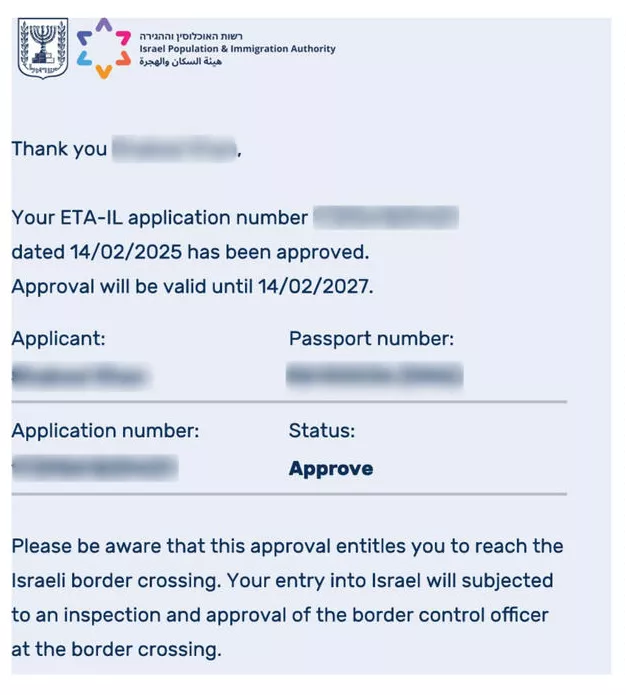
The Israel ETA (Electronic Travel Authorization) is valid for 2 years or until your passport expires, whichever comes first. Each entry under the ETA allows a maximum stay of 90 days. The ETA itself cannot be renewed or extended – it is a fixed authorization tied to your passport.
However, if you are already in Israel and need more time, you can apply for a visa extension through PIBA. This converts your stay from ETA-authorized to visa-authorized, giving you additional days legally. The key distinction is:
| Authorization | Duration | Renewable | Where to Apply |
|---|---|---|---|
| Israel ETA | 90 days per entry | No (reapply after expiry) | Online before travel |
| Tourist visa extension | Up to 90 additional days | Case-by-case | PIBA office in Israel |
| B2 visa (embassy) | Up to 3 months | Yes, at embassy | Israeli consulate abroad |
If your ETA is still valid but you have used up your 90-day stay, you must leave Israel and re-enter to reset the clock – or apply for an extension before the 90 days expire.
Who Needs a Visa Extension in Israel?
Several situations may require you to extend your stay beyond the standard 90-day ETA limit:
- Tourism overrun – you want to explore more of Israel than your original itinerary allowed
- Business meetings extended – your business activities are taking longer than expected
- Medical emergencies – you or a family member need medical treatment in Israel
- Family events – weddings, births, or funerals requiring a longer presence
- Religious pilgrimages – extended study or worship at holy sites
- Flight cancellations or travel disruptions – external events preventing timely departure
- Academic or research activities – short-term study that exceeds 90 days
Each case is evaluated on its own merits. PIBA does not guarantee approval – extensions are discretionary.
How to Apply for a Visa Extension in Israel
Step 1: Visit a PIBA Office Before Your ETA Expires
You must apply before your 90-day stay expires. Overstaying even by one day is a violation that can result in fines and future entry bans. Locate the nearest PIBA office – the main offices are in:
| City | Address | Typical Wait |
|---|---|---|
| Jerusalem | Shlomtsion HaMalka 1 | 1-3 hours |
| Tel Aviv | Sderot Yerushalayim 34, Holon | 1-4 hours |
| Haifa | Pal-Yam Avenue 15 | 1-2 hours |
| Be’er Sheva | Ha’atzmaut Street 56 | 1-2 hours |
Bring all required documents (see below) and arrive early – queues can be long, especially during peak tourist season (March-May, September-November).
Step 2: Prepare Your Documents
You will need the following for a tourist visa extension application:
| Document | Details |
|---|---|
| Valid passport | Must be valid for at least 6 months beyond your requested extension date |
| Completed application form | Available at the PIBA office |
| Passport photos | 2 recent photos meeting Israeli specifications |
| Proof of accommodation | Hotel booking or host invitation letter |
| Return flight booking | Showing departure within the extended period |
| Financial proof | Bank statements or credit cards showing you can support yourself |
| Extension fee payment | NIS 175 (approximately USD 50) |
| Letter explaining reason | Brief statement of why you need more time |
If your extension is due to a medical emergency, bring hospital documentation. For family events, bring proof of the relationship and event (wedding invitation, death certificate, birth announcement).
Step 3: Submit Your Application
At the PIBA office, take a number and wait for your turn. The officer will review your documents and may ask questions about:
- Why you need to stay longer
- How you will financially support yourself
- When you plan to leave Israel
- Whether you have any pending visa applications at an embassy
The officer may approve the extension on the spot, deny it, or request additional documentation. In most straightforward cases (tourism with proof of funds and return flight), the decision is made the same day.
Step 4: Receive Your Extension Decision
If approved, you receive a visa extension stamp in your passport with the new allowed stay date. If denied, you must leave Israel by your original 90-day deadline.
What Happens If You Overstay Your Israel ETA
Overstaying your ETA is a serious immigration violation in Israel. The consequences escalate with the length of overstay:
| Overstay Period | Likely Consequence |
|---|---|
| 1-7 days | Fine of NIS 500-1,000, warning stamp in passport |
| 8-30 days | Fine of NIS 1,000-5,000, possible entry ban of 1-5 years |
| 31-90 days | Deportation proceedings, entry ban of 5-10 years |
| 90+ days | Criminal charges possible, permanent entry ban |
Israel does not have an “exit visa” system – you can leave voluntarily at any time. However, overstayers caught at the airport face immediate fines and may be detained until the fine is paid. Border control officers check every departure against entry records.
Critical warning: If you are deported from Israel, you may be barred from re-entry for up to 10 years, and this information is shared with immigration databases of allied countries (US, UK, Canada, Australia, EU states). A deportation record can affect visa applications worldwide.
Extending Different Visa Types
The extension process varies depending on what type of visa you hold:
B2 Tourist Visa Extension
The most common extension. If you entered on an ETA (which functions as a B2 authorization), you can request up to 90 additional days at a PIBA office. Approval depends on your reason, financial standing, and immigration history.
B1 Work Visa Extension
Work visa extensions must be requested by your employer through the Ministry of Interior. You cannot extend a work visa independently – your sponsoring employer initiates the process. The employer must demonstrate ongoing need for your employment.
Student Visa (A2) Extension
Student visa extensions are handled through your educational institution. The university or yeshiva submits the extension request along with proof of continued enrollment and academic progress.
Religious Visa (A3) Extension
Religious workers and clergy apply through their sponsoring religious organization. Extensions require a letter from the sponsoring institution explaining the continued need for your presence.
ETA Expiry vs. Stay Expiry: Understanding the Difference
Many travelers confuse the ETA validity period with the allowed stay duration. These are separate concepts:
| Concept | Meaning | Duration |
|---|---|---|
| ETA validity | How long the authorization exists in the system | 2 years (or passport expiry) |
| Allowed stay | How long you can remain in Israel per visit | 90 days per entry |
| Multiple entries | How many times you can use the same ETA | Unlimited within validity period |
Your ETA status shows whether the authorization is active. Even with a valid ETA, you cannot stay beyond 90 days without an extension. If your ETA expires while you are in Israel, it does not affect your current stay – you must leave by your allowed stay date regardless.
FAQs About Israel ETA Extension
Can I extend my Israel ETA online?
No. Visa extensions in Israel must be applied for in person at a PIBA office. There is no online extension process for tourist stays. The original ETA application is online-only, but extensions require a physical visit.
How much does it cost to extend my stay in Israel?
The extension fee is NIS 175 (approximately USD 50). This is non-refundable even if the extension is denied. Payment is typically accepted in cash or by credit card at the PIBA office.
How many times can I extend my stay?
There is no official limit on the number of extensions, but each subsequent extension is harder to justify. PIBA may question why you have not departed. Generally, one extension of up to 90 days is the practical maximum for tourists.
What if I overstay by just one day?
Even a single day of overstay is recorded and may result in a fine at the airport when departing. While a one-day overstay is unlikely to result in an entry ban, it creates a record that could affect future visa applications to Israel and other countries.
Can I re-enter Israel after my 90-day stay to reset the clock?
Technically, leaving Israel and re-entering starts a new 90-day period. However, border officers may question frequent re-entries and suspect you are living in Israel without proper authorization. A pattern of consecutive 90-day stays with brief exits to Jordan or Egypt is a red flag that can result in entry denial.
Do I need a visa extension if my flight is cancelled?
If your flight is cancelled and you cannot leave Israel by your allowed stay date, visit a PIBA office immediately with proof of the cancellation (airline notification, rebooking confirmation). PIBA typically grants short extensions (7-14 days) for documented travel disruptions without penalty.
Can I work during my visa extension period?
No. A tourist visa extension does not grant work authorization. Working in Israel on a tourist extension is illegal and can result in deportation and an entry ban. You need a B1 work visa sponsored by an employer to work legally.
What happens if my extension is denied?
If your extension is denied, you must leave Israel before your current 90-day stay expires. There is no appeal process for extension denials at PIBA. You can reapply at an Israeli embassy abroad for a different visa type if needed.