

Israel visa requirements depend on your nationality, purpose of visit, and length of stay. Citizens of visa-exempt countries can enter with just an Electronic Travel Authorization (ETA-IL), while others must apply for a visa at an Israeli embassy or consulate before traveling.
Understanding the requirements before you book your trip saves time and prevents entry refusals at the border. This guide covers every document, eligibility rule, and step you need to prepare for your trip to Israel in 2026.
Do You Need a Visa or an ETA-IL?
Israel operates a two-track entry system. Your nationality determines which track applies to you.
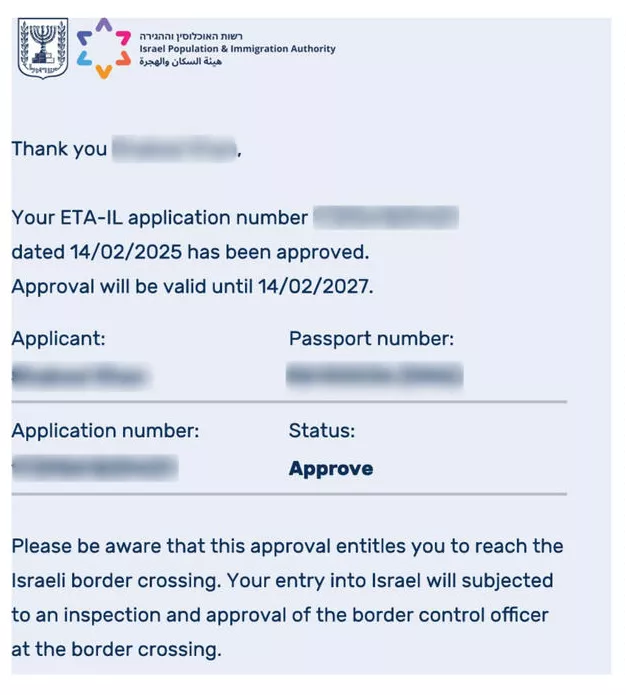
Track 1 – ETA-IL (Electronic Travel Authorization): Citizens of over 90 visa-exempt countries can apply online for an ETA-IL before traveling. The process takes minutes and costs 25 NIS (approximately $7 USD). If you are from the United States, United Kingdom, Canada, Australia, or most EU countries, this is likely your path. Learn more about the full ETA-IL requirements.
Track 2 – Traditional Visa: Citizens of countries that are not visa-exempt must apply for a visa at an Israeli embassy or consulate. This applies to travelers from many countries in Africa, Asia, and parts of the Middle East. See our complete Israel visa types guide for details on B2, B1, A2, and other visa categories.
The table below summarizes the two tracks:
| Requirement | ETA-IL (Visa-Exempt) | Traditional Visa |
|---|---|---|
| Who qualifies | Citizens of 90+ exempt countries | Citizens of non-exempt countries |
| Application method | Online | Embassy or consulate |
| Processing time | Minutes to 48 hours | 2-8 weeks |
| Cost | 25 NIS (~$7 USD) | $25-$80 USD (varies by type) |
| Validity | Up to 2 years | Varies (single/multiple entry) |
| Max stay per visit | 90 days | Depends on visa type |
General Entry Requirements for All Travelers
Regardless of whether you need a visa or an ETA-IL, every traveler entering Israel must meet these baseline requirements:
Valid Passport
Your passport must be valid for at least six months beyond your planned date of entry into Israel. This is strictly enforced – travelers with passports expiring sooner than six months are routinely denied boarding by airlines and refused entry at border control.
Example: If you plan to enter Israel on September 1, 2026, your passport must be valid until at least March 1, 2027.
For dual nationals, Israel allows entry on either passport. However, if you hold Israeli citizenship, you must enter and exit on your Israeli passport.
Proof of Accommodation
Border officers may ask for proof of where you will stay. Acceptable documents include:
- Hotel booking confirmation
- Airbnb reservation
- Invitation letter from a host in Israel (with their address and contact details)
Return or Onward Ticket
You must show a return ticket or proof of onward travel. One-way tickets without a visa can raise red flags at immigration. If you are traveling on a flexible itinerary, book a refundable onward flight or a bus ticket to a neighboring country.
Sufficient Funds
While not always checked, you should be prepared to show proof of financial means to support your stay. A recent bank statement, credit cards, or cash in a convertible currency are acceptable.
Document Checklist by Traveler Category
Different categories of travelers have different document requirements. Use the checklist below for your situation.
Tourists (B2 Visa or ETA-IL)
- Valid passport (6+ months validity)
- ETA-IL approval (for visa-exempt nationals) or B2 visa
- Return/onward flight ticket
- Hotel reservation or host invitation
- Travel insurance (recommended)
- Completed arrival card (provided on the plane or at the border)
Business Travelers (B1 Visa)
- Valid passport (6+ months validity)
- B1 work visa (required for paid work activities)
- Letter from inviting Israeli company
- Proof of professional qualifications
- Employment contract or business correspondence
- Return ticket
Students (A2 Visa)
- Valid passport (6+ months validity)
- A2 student visa
- Acceptance letter from an Israeli educational institution
- Proof of tuition payment or scholarship
- Financial proof (bank statement or sponsor letter)
- Health insurance coverage
Religious Workers (A3 Visa)
- Valid passport (6+ months validity)
- A3 clergy visa
- Letter from the religious institution in Israel
- Proof of religious ordination or affiliation
- Background check from home country
Family Members (A4 Visa)
- Valid passport (6+ months validity)
- A4 dependent visa
- Marriage certificate (for spouses) or birth certificate (for children)
- Copy of the primary visa holder’s valid visa
- Proof of relationship
Passport Requirements in Detail
Israel’s passport rules are straightforward but strictly enforced:
- Minimum validity: 6 months from date of entry
- At least 2 blank pages recommended (for entry/exit stamps)
- Machine-readable passports preferred (e-Passports with chip accepted)
- Temporary or emergency travel documents may require additional processing
- Damaged passports (water damage, torn pages, faded text) may be rejected
If your passport does not meet these requirements, renew it before applying for your visa or ETA-IL. Processing times for passport renewal vary by country – start at least 3 months before your trip.
Visa-Exempt Countries
Citizens of the following regions and countries do not need a traditional visa for short stays (up to 90 days) and can apply for an ETA-IL instead:
North America: United States, Canada
Europe: All EU member states, United Kingdom, Switzerland, Norway, Iceland, Liechtenstein, and most other European countries
Asia-Pacific: Australia, New Zealand, Japan, South Korea, Singapore, Hong Kong
Latin America: Brazil, Argentina, Mexico, Chile, Colombia, and most other South and Central American countries
Other: South Africa, Russia (for stays up to 90 days)
This list is not exhaustive and may change. Always verify your country’s current status on the official Israeli government portal before traveling. For a comprehensive list, see our guide to Israel visa-exempt countries.
Important: Even visa-exempt travelers can be denied entry at the border if they have a history of overstaying, prior deportation, security concerns, or cannot demonstrate the purpose and means of their visit.
How to Apply for a Traditional Visa
If you are not visa-exempt, follow these steps to apply for an Israeli visa:
Step 1: Determine the visa type you need. The most common is the B2 tourist visa for short visits. Work, study, and religious activities require specific visa categories (B1, A2, A3). Read our complete guide on how to apply for step-by-step instructions.
Step 2: Gather required documents. Each visa type has specific document requirements (see the checklists above). In general, you will need your passport, application form, passport photos, proof of accommodation, return ticket, and financial proof.
Step 3: Submit your application. Applications are submitted at the nearest Israeli embassy or consulate. Some countries allow mail-in applications; others require in-person appointments. Check with your local embassy for their specific process.
Step 4: Pay the visa fee. Fees vary by visa type and country of application:
| Visa Type | Fee (approximate) | Notes |
|---|---|---|
| B2 Tourist | $25-$40 USD | Single or multiple entry |
| B1 Work | $50-$80 USD | Employer sponsorship required |
| A2 Student | $40-$50 USD | University enrollment required |
| A3 Clergy | $40-$50 USD | Religious institution sponsorship |
| A4 Dependent | $25-$40 USD | Tied to primary visa holder |
| ETA-IL | 25 NIS (~$7 USD) | Online application only |
Step 5: Wait for processing. Standard processing takes 2-8 weeks depending on the embassy, visa type, and time of year. Apply at least 6-8 weeks before your planned travel date.
Step 6: Collect your visa. If approved, your visa will be placed as a sticker in your passport. Verify all details (name, dates, visa type) before leaving the embassy.
Health and Travel Insurance
Israel does not formally require travel insurance for entry, but it is strongly recommended. If you are unsure whether you need a visa or an ETA, read our comparison of Israel ETA vs visa options to determine the right path for your nationality. Medical costs for tourists in Israel can be high, and your domestic health insurance may not cover you abroad.
Recommended coverage includes:
- Emergency medical treatment (minimum $50,000 USD coverage)
- Medical evacuation
- Trip cancellation and interruption
- Lost luggage and personal belongings
- COVID-19 related medical expenses (check current policies)
Some visa applications (particularly for longer stays) may require proof of health insurance. Student visa (A2) holders are typically required to have Israeli health insurance through their educational institution.
Common Reasons for Entry Denial
Even with valid documents, travelers can be refused entry at the Israeli border. Common reasons include:
- Passport validity less than 6 months
- Prior overstay in Israel or deportation history
- Security concerns flagged in the system
- Inability to explain the purpose of the visit
- Lack of accommodation or return ticket
- Previous visa violations
- Travel stamps from certain countries (this may trigger additional questioning but is not grounds for automatic denial)
Israel’s border security is known for thorough questioning. Answer honestly, remain calm, and have your documents organized and accessible. The questioning process at Ben Gurion Airport can take 1-3 hours for first-time visitors.
Special Considerations
Dual Nationals
If you hold Israeli citizenship alongside another nationality, you must enter and exit Israel on your Israeli passport. Dual nationals are subject to Israeli law, including potential military service obligations.
Minors Traveling Alone
Children under 18 traveling without both parents may need:
- Notarized consent letter from the absent parent(s)
- Birth certificate
- Contact details for parents and the hosting party in Israel
Previous Visa Refusals
If you were previously denied an Israeli visa, you must disclose this in your new application. Concealing prior refusals can result in a permanent ban. Include an explanation letter addressing the reasons for the prior refusal and any changes in your circumstances.
Travelers with Stamps from Certain Countries
Having stamps from countries that do not have diplomatic relations with Israel (such as Iran, Lebanon, Syria, or Iraq) may result in additional questioning at the border. This does not automatically mean denial, but be prepared to explain the purpose of those visits.
FAQs About Israel Visa Requirements
Do US citizens need a visa for Israel?
No. US citizens can visit Israel for up to 90 days without a traditional visa. They need to apply for an Electronic Travel Authorization (ETA-IL) online before departure. The process takes minutes and costs 25 NIS (about $7 USD).
How long does it take to get an Israeli visa?
An ETA-IL is approved within minutes to 48 hours. Traditional visas applied for at an embassy take 2-8 weeks depending on the visa type, embassy workload, and time of year. Apply at least 6-8 weeks before your trip.
Can I work in Israel on a tourist visa?
No. Tourist visas (B2) and ETA-ILs do not permit any form of paid or unpaid work. To work in Israel, you need a B1 work visa, which requires employer sponsorship and is processed through the Ministry of Interior.
What happens if I overstay my visa in Israel?
Overstaying your visa is a serious violation. Penalties include fines, deportation, and a ban on re-entry for a period of years (typically 5-10 years). If you realize you have overstayed, contact the Population and Immigration Authority immediately to regularize your status.
Is a return ticket mandatory for entry to Israel?
While not a legal requirement, a return or onward ticket is strongly expected. Airlines may deny boarding without one, and border officers will ask about your departure plans. Having a confirmed return flight significantly smooths the entry process.
Can I extend my stay in Israel beyond 90 days?
ETA-IL holders and B2 visa holders can apply for an extension at the Population and Immigration Authority office before their authorized stay expires. Extensions are not guaranteed and require a valid reason. Overstaying without an extension results in penalties.
Do I need a transit visa for connecting flights through Israel?
If you remain in the international transit area and do not pass through immigration, you generally do not need a visa. However, if you need to collect and re-check luggage, or if your transit exceeds 24 hours, you may need to clear immigration and should check your visa requirements.
Summary
Preparing your Israel visa requirements well in advance ensures a smooth trip. Citizens of visa-exempt countries benefit from the fast online ETA-IL process, while others should allow several weeks for embassy processing. Regardless of your path, make sure your passport has at least 6 months validity, prepare your accommodation and return ticket documentation, and carry copies of all supporting documents.
Check your specific nationality requirements and apply early to avoid last-minute complications.