

Israel uses a structured visa system with categories ranging from A/1 through B/5, each designed for a specific purpose of visit. Whether you are a tourist, student, worker, clergy member, or family dependent, there is a designated visa type that matches your travel plans. Understanding which category applies to you is the first step toward a successful application.
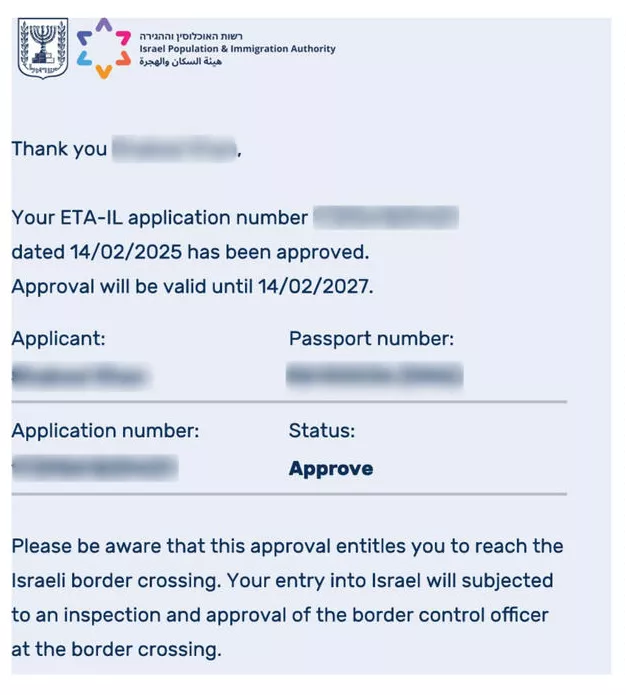
This guide covers every Israel visa type, their requirements, fees, and who they are designed for.
Overview of Israel Visa Categories
Israel visas are classified using an alphanumeric code system. The letter indicates the general status: A visas are for temporary residents and immigrants, B visas are for visitors, workers, and volunteers, and special categories cover investors and doubtful-status cases.
The table below summarizes all Israel visa types at a glance:
| Code | Visa Name | Purpose | Fee |
|---|---|---|---|
| A/1 | Aliyah Visa | Immigration under Law of Return | 195 NIS |
| A/2 | Student Visa | Academic study at recognized institutions | 195 NIS |
| A/3 | Clergy Visa | Religious workers fulfilling clerical duties | 195 NIS |
| A/4 | Family Visa | Spouses and children of A/2 or A/3 holders | 195 NIS |
| A/5 | Temporary Resident | General temporary residency (partners, humanitarian) | 195 NIS |
| B/1 | Work Visa | Employment in Israel for a limited period | 195 NIS |
| B/1 | Working Holiday | Work and travel for ages 18-30 (select countries) | 195 NIS |
| B/2 | ETA-IL | Electronic travel authorization (visa-exempt nationals) | 25 NIS |
| B/2 | e-Visa | Electronic visa (visa-required nationals) | 100 NIS |
| B/2 | Visitor Visa | Tourism, business, or short study up to 90 days | 100 NIS |
| B/3 | Doubtful Status | Entry status unclear; one-month validity | 100 NIS |
| B/4 | Volunteer Visa | Volunteering in recognized organizations | 195 NIS |
| B/5 | Foreign Investor | Investment-based residency (US E-1/E-2 reciprocity) | $222 |
For travelers from visa-exempt countries, the ETA-IL (Electronic Travel Authorization) is the simplest entry option. You can apply for the ETA-IL online in just a few minutes.
A/1 Aliyah Visa
The A/1 visa is designed for individuals eligible for immigration to Israel under the Law of Return. This law grants Jews, their children, and their grandchildren the right to immigrate to Israel and receive citizenship.
Key details:
- Available to those with Jewish heritage or conversion to Judaism
- Grants temporary resident status that can lead to permanent residency
- Fee: 195 NIS (approximately 52 EUR or 54 USD)
- Multiple-entry visa
The A/1 visa is distinct from other visa types because it is a pathway to permanent residency and eventual citizenship. Applicants typically work through the Jewish Agency or an Israeli consulate in their home country.
A/2 Student Visa
The A/2 student visa allows foreign nationals to study at recognized academic institutions in Israel, including universities, colleges, and yeshivas. This is a multiple-entry visa valid for one year with the possibility of extension.
Important points:
- Valid for study at accredited institutions only
- Students generally cannot work in Israel, with limited exceptions for academic employment (typically PhD and some MA students)
- Fee: 195 NIS
- Israel hosts a significant number of international students, with over 1,800 foreign PhD students as of 2023
The student visa also covers yeshiva students who wish to study at recognized religious study institutions in Israel.
A/3 Clergy Visa
The A/3 clergy visa is issued to religious workers who need to fulfill long-term clerical duties among their religious communities in Israel. This visa requires an invitation from a recognized religious institution in Israel.
Requirements include:
- Invitation from a recognized religious institution in Israel
- Purpose must be long-term clerical or religious duties
- Fee: 195 NIS
- Applicable to clergy of all recognized religions
This visa is essential for priests, rabbis, imams, monks, and other religious figures serving established communities in Israel.
A/4 Family Visa
The A/4 visa covers spouses and minor children of A/2 (student) and A/3 (clergy) visa holders. It allows families to stay together while the primary visa holder studies or serves in a religious capacity.
Key details:
- Available only to spouses and minor children
- Linked to the primary holder’s A/2 or A/3 visa
- Fee: 195 NIS
- Validity matches the primary visa holder’s status
A/5 Temporary Resident Visa
The A/5 visa is a general temporary resident visa for situations not covered by A/1 through A/4 categories. Common uses include:
- Partners of Israeli citizens (family reunification)
- Humanitarian cases
- Other special circumstances approved by the Ministry of Interior
This visa provides temporary resident status and is typically issued on a case-by-case basis at the discretion of Israeli authorities.
B/1 Work Visa
The B/1 work visa is for foreign nationals whose stay in Israel is approved for employment purposes for a limited period. This is the standard work permit visa and requires sponsorship from an Israeli employer.
Key requirements:
- Employer sponsorship and approval from the Ministry of Interior
- Valid for a specific employment period
- Fee: 195 NIS
- The employer must demonstrate that the position cannot be filled locally
Working Holiday Visa
Israel also offers a working holiday visa under the B/1 category for young adults aged 18 to 30 from select countries. This visa allows participants to work and travel in Israel for up to one year. Eligibility depends on bilateral agreements between Israel and the applicant’s home country.
B/2 Visitor Visa and ETA-IL
The B/2 category covers the most common entry types for short-term visitors. Tourism, business visits, and short-term study (up to 90 days) all fall under this category. Depending on your nationality, you will need one of three options:
ETA-IL (Electronic Travel Authorization)
The ETA-IL is the newest and simplest entry option, launched as part of Israel’s modernization of its border control system. It is available to nationals of visa-exempt countries and can be obtained entirely online.
- Fee: 25 NIS
- Valid for tourism, business, or short study
- Stay up to 90 days
- Apply online through the official ETA-IL portal
To learn more about the application process, see our ETA-IL application guide.
e-Visa
For nationals of visa-required countries, Israel offers an electronic visa (e-Visa) option. This allows applicants to submit their visa request online without visiting an embassy in person.
- Fee: 100 NIS
- Valid for tourism, business, or short study
- Stay up to 90 days
- Processing through the Israeli Ministry of Interior online system
Standard Visitor Visa
The traditional visitor visa (also known as a tourist visa) is available through Israeli embassies and consulates worldwide for nationals of visa-required countries.
- Fee: 100 NIS (approximately 26 EUR or 27 USD)
- Valid for tourism, business visits, or short-term study
- Maximum stay of 90 days
- Requires application at an Israeli consulate or embassy
Visitor Visa Extension
If you need to extend your stay beyond the initial visa period, you can apply for a visitor visa extension through the Population and Immigration Authority in Israel.
- Fee: 195 NIS
- Must be applied for before the current visa expires
- Extensions are granted at the discretion of authorities
B/3 Doubtful Status Visa
The B/3 visa is a unique category for individuals whose entry status is unclear. It provides a one-month window during which the holder can clarify their status and reclassify into an appropriate visa category.
- Fee: 100 NIS (approximately 26 EUR or 27 USD)
- Valid for one month only
- Allows the holder to resolve their immigration status
- Can be converted to another visa category during the validity period
B/4 Volunteer Visa
The B/4 visa is designed for foreign nationals who wish to volunteer in recognized organizations in Israel. Eligible organizations include:
- Welfare and health organizations
- Religious institutions
- Kibbutzim (kibbutz volunteer programs)
- Moshav volunteer programs
- Philanthropic institutes
- Israel Defense Forces (IDF) volunteer programs
Fee: 195 NIS. The volunteer visa requires sponsorship from the host organization.
B/5 Foreign Investor Visa
The B/5 visa is a special category based on reciprocity with the United States E-1 and E-2 visa programs. It allows US nationals (and nationals of other qualifying countries) to live and work temporarily in Israel based on a qualifying investment.
Key details:
- Fee: $222 (approximately 213 EUR)
- Allows the holder and family members to live and work in Israel
- Based on a substantial investment in an Israeli business
- Reciprocal to US E-1 (treaty trader) and E-2 (treaty investor) visas
How to Choose the Right Israel Visa Type
Selecting the correct visa depends on your purpose of visit and nationality:
- Tourism or short business trip from a visa-exempt country – Apply for the ETA-IL online
- Tourism from a visa-required country – Apply for an e-Visa or standard visitor visa
- Study at an Israeli university – Apply for the A/2 student visa
- Employment in Israel – Your employer must sponsor a B/1 work visa
- Religious service – Apply for the A/3 clergy visa with institutional invitation
- Volunteering – Apply for the B/4 volunteer visa through a recognized organization
- Investment-based residency – Apply for the B/5 investor visa
FAQs About Israel Visa Types
Do I need a visa to visit Israel for tourism?
It depends on your nationality. Citizens of visa-exempt countries can enter Israel with an [ETA-IL](https://israel-eta.info/) (Electronic Travel Authorization), which costs 25 NIS and can be obtained online. Citizens of visa-required countries need a B/2 visitor visa or e-Visa, which costs 100 NIS.
What is the difference between the ETA-IL and a regular visa?
The [ETA-IL](https://israel-eta.info/) is an electronic travel authorization available to citizens of visa-exempt countries. It is cheaper (25 NIS vs 100 NIS), faster to obtain (online application), and does not require a visit to an embassy. A regular visitor visa is for citizens of visa-required countries and involves a more thorough application process.
Can I work in Israel on a tourist visa?
No. Working in Israel on a tourist visa (B/2) is not permitted. If you want to work in Israel, you need a B/1 work visa, which requires employer sponsorship and approval from the Ministry of Interior.
How long can I stay in Israel on a visitor visa?
Both the ETA-IL and standard visitor visas allow stays of up to 90 days. Extensions can be requested through the Population and Immigration Authority for an additional fee of 195 NIS.
What is the A/2 student visa and who is eligible?
The A/2 student visa is for foreign nationals enrolled at recognized academic institutions in Israel, including universities, colleges, and yeshivas. It is a multiple-entry visa valid for one year with extension possibilities. Students generally cannot work unless engaged in academic employment.
Can I convert my tourist visa to a work visa while in Israel?
Visa conversion while in Israel is possible but requires approval from the Ministry of Interior. It is generally recommended to apply for the appropriate visa type before entering Israel to avoid complications with your immigration status.
What is the B/5 investor visa?
The B/5 visa allows foreign investors (primarily US nationals) to live and work in Israel based on a qualifying business investment. It is based on reciprocity with the US E-1 and E-2 visa programs and costs $222.