

Israel entry requirements include a valid passport with at least six months of remaining validity, an approved ETA-IL or visa depending on your nationality, and proof of accommodation and return travel. All travelers pass through Israel’s security screening and border control at points of entry.
Whether you are arriving by air, land, or sea, understanding what Israel expects at the border helps you avoid delays, questioning, or denial of entry. This guide covers every document, process, and rule you need to know before your trip in 2026.
What You Need to Enter Israel
Every traveler entering Israel must satisfy a set of baseline requirements regardless of nationality. The specific documents depend on whether your country has a visa-exemption agreement with Israel.
| Requirement | Visa-Exempt Nationals | Visa-Required Nationals |
|---|---|---|
| Valid passport | 6+ months from entry date | 6+ months from entry date |
| Travel authorization | ETA-IL (online, 25 NIS) | Visa sticker from embassy |
| Proof of accommodation | Hotel booking or host letter | Hotel booking or host letter |
| Return/onward ticket | Required | Required |
| Proof of funds | May be requested | May be requested |
| Processing time | Minutes to 48 hours | 2-8 weeks |
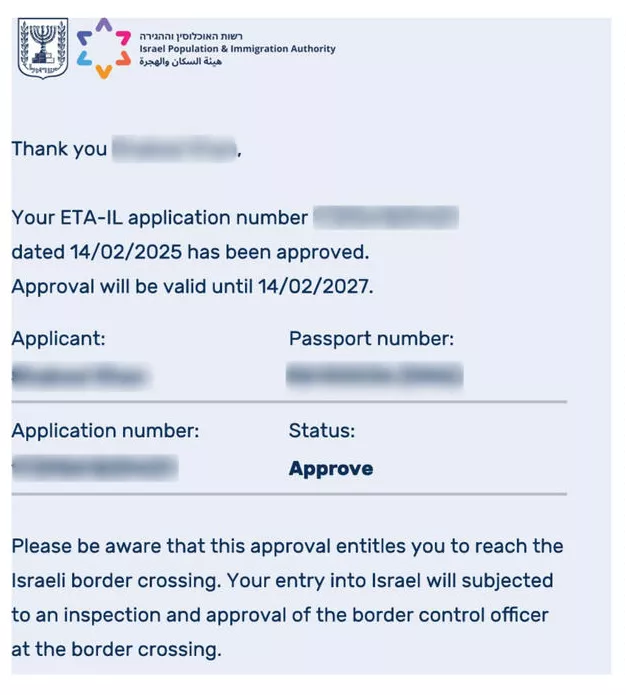
If you are from a visa-exempt country (United States, United Kingdom, Canada, Australia, most EU countries, and over 90 others), you need an ETA-IL instead of a traditional visa. The ETA-IL is applied for online, costs 25 NIS (approximately $7 USD), and is typically approved within minutes.
For travelers from non-exempt countries, a visa must be obtained at an Israeli embassy or consulate before departure. See our complete Israel visa requirements guide for detailed document checklists by traveler category.
Documents Required at the Border
When you arrive at an Israeli port of entry, border officers will check your documents. Have these ready before you reach the counter.
Passport Requirements
Your passport must meet these conditions:
- Validity: At least six months beyond your planned entry date into Israel
- Condition: Undamaged – water damage, torn pages, or faded text can result in rejection
- Blank pages: At least two blank pages recommended for entry and exit stamps
- Type: Machine-readable or biometric (e-Passport with chip) passports are preferred
Israel does not accept temporary or emergency travel documents for routine entry. If your passport is damaged or expiring soon, renew it well before your trip.
Example: If you plan to enter Israel on October 15, 2026, your passport must be valid until at least April 15, 2027.
ETA-IL or Visa
Your entry authorization must be approved before arrival. For visa-exempt nationals, the ETA-IL application is done online and linked electronically to your passport. Border officers can see your ETA-IL status when they scan your passport.
Visa holders should carry the physical passport containing the visa sticker. Electronic visa (e-Visa) holders should print a copy of their approval.
Proof of Accommodation
Border officers may ask where you are staying. Acceptable proof includes:
- Hotel or hostel booking confirmation
- Airbnb or vacation rental reservation
- Invitation letter from a host in Israel with their address and phone number
- Tour package confirmation showing accommodation details
Return or Onward Ticket
A return or onward flight ticket is expected. Airlines may deny boarding if you do not have one, and border officers will ask about your departure plans. If you are traveling on a flexible itinerary, book a refundable onward ticket or have proof of a bus or ferry crossing to a neighboring country.
Proof of Financial Means
While not always requested, you should be prepared to show that you can support yourself during your stay. Acceptable proof includes:
- Recent bank statement (printed or on your phone)
- Credit cards in your name
- Cash in a convertible currency (USD, EUR, GBP)
- Sponsorship letter if someone else is covering your costs
Points of Entry into Israel
Israel has several official entry points. Each has its own procedures, but the core requirements are the same.
Ben Gurion International Airport (TLV)
Ben Gurion Airport near Tel Aviv is Israel’s main international gateway and the arrival point for most visitors. The airport handles flights from major carriers worldwide and has comprehensive immigration and customs facilities.
Security screening at Ben Gurion begins before you even enter the terminal – vehicles are checked at the airport entrance, and passengers go through initial questioning at a security checkpoint before reaching the check-in area (for departures) or immediately upon arrival.
What to expect on arrival at Ben Gurion:
- Luggage screening – Bags go through X-ray machines in the arrivals hall
- Passport control – Officers check your passport, ETA-IL or visa, and may ask questions
- Customs – Final checkpoint before exiting the airport
The entire process from landing to exiting the airport typically takes 30 minutes to 2 hours, though it can take longer during peak travel periods (Jewish holidays, summer months).
Ramon Airport (ETM)
Ramon International Airport, located near Eilat in southern Israel, opened in 2019 and handles primarily European charter and low-cost carrier flights. Entry procedures are the same as Ben Gurion, though the airport is smaller and lines are usually shorter.
Land Border Crossings
Israel has several land border crossings with neighboring countries:
Jordan crossings:
– Allenby Bridge (King Hussein Bridge) – The busiest land crossing, connecting the West Bank with Jordan. Located between Jerusalem and Amman. Note: This crossing operates under specific procedures and may have limited hours.
– Yitzhak Rabin Crossing (Arava) – Near Eilat, connecting southern Israel with Aqaba in Jordan
– Jordan River Crossing (Sheikh Hussein) – In northern Israel, near Beit She’an
Egypt crossing:
– Taba Border Crossing – Located at the southern tip of Israel near Eilat, connecting to Egypt’s Sinai Peninsula
Land crossings generally have shorter security lines than airports, but you will still go through full immigration and customs checks. Bring cash for any border fees, as card payment is not always available at every crossing.
Sea Ports
The Haifa port occasionally receives cruise ships and ferry services. Passengers arriving by sea go through the same immigration process as air arrivals.
The Border Control Process
Israel’s border control is known for being thorough. Understanding the process helps you prepare and move through quickly.
What to Expect During Questioning
At passport control, an officer will scan your passport and may ask you several questions. Common questions include:
- What is the purpose of your visit?
- How long are you staying?
- Where are you staying?
- Have you been to Israel before?
- What do you do for work at home?
First-time visitors may face longer questioning (15-30 minutes). Returning visitors with clean travel histories typically pass through faster. The officer’s questions are designed to verify the legitimacy of your visit – answer honestly and calmly.
Tips for a Smooth Entry
- Answer questions directly – Give short, clear answers. Do not volunteer extra information unless asked.
- Have documents organized – Keep your passport, ETA-IL confirmation, hotel booking, and return ticket easily accessible.
- Be patient – Lines can be long, especially during summer and holiday periods. Arrive with time to spare if you have connecting transportation.
- Stay calm – If selected for additional screening, cooperate fully. Extended questioning does not mean you are suspected of wrongdoing.
- Remove hats and sunglasses at the passport control counter.
- Keep your phone charged – Officers may ask to see digital copies of bookings or correspondence.
Israel Customs Rules
After clearing passport control, you pass through customs. Israel has specific rules about what you can and cannot bring into the country.
Duty-Free Allowances
Travelers arriving in Israel can bring the following quantities without paying customs duty:
| Item | Allowance (adults 18+) |
|---|---|
| Perfume | Up to 250 ml |
| Cosmetics and toiletries | Up to 250 ml total |
| Wine | Up to 2 liters |
| Other alcoholic beverages | Up to 1 liter |
| Cigarettes | Up to 250 cigarettes |
| Cigars | Up to 250 grams |
| Tobacco | Up to 250 grams |
| Gifts and other goods | Up to $200 USD value |
These allowances are per person. Items exceeding these limits are subject to customs duty and taxes.
Prohibited and Restricted Items
The following items are prohibited from entering Israel:
- Weapons and ammunition without a valid Israeli firearms license
- Narcotics and illegal drugs (possession carries severe criminal penalties)
- Counterfeit goods and currency
- Obscene material as defined by Israeli law
- Certain plants and plant products without a phytosanitary certificate
- Live animals without proper veterinary certificates and quarantine arrangements
Restricted items (require permits or have quantity limits):
- Medications – Bring a prescription from your doctor and keep medications in original packaging. Some medications available over-the-counter in other countries are controlled in Israel.
- Food products – Fresh fruits, vegetables, and meat products may be restricted. Commercial quantities of food require import permits.
- Electronics – No special restrictions for personal use, but commercial quantities may require customs clearance.
- Agricultural products – Seeds, plants, and soil require a phytosanitary certificate from the country of origin.
Currency Declaration
If you are carrying NIS 50,000 or more (or the equivalent in foreign currency), you must declare it to customs on arrival and departure. This includes cash, checks, and traveler’s checks. Failure to declare can result in fines and seizure of the funds.
Entry by Land from Jordan and Egypt
Entering Israel overland has some specific considerations.
From Jordan:
– All three crossings (Allenby, Rabin, Jordan River) process both Israeli and Jordanian immigration
– You may need a Jordanian exit visa depending on your nationality
– The Allenby Bridge crossing does not stamp your passport – entry and exit stamps are placed on a separate card
– Bus and taxi services connect the crossings to major cities
– Operating hours vary by crossing and day of week
From Egypt (Taba):
– The Taba crossing is open daily
– You clear Israeli immigration on the Israeli side
– An Egyptian visa may be required (available at the Taba crossing for some nationalities)
– The crossing is a popular route for travelers visiting the Sinai Peninsula
Important: Travelers who enter Israel through a land border crossing from Jordan or Egypt still need a valid ETA-IL or visa. The same entry requirements apply regardless of your mode of arrival.
Special Situations
Dual Nationals
If you hold Israeli citizenship alongside another nationality, you must enter and exit Israel on your Israeli passport. Entering on a foreign passport when you hold Israeli citizenship is illegal under Israeli law. Dual nationals may also be subject to Israeli laws that do not apply to tourists, including potential military service obligations.
If you hold citizenship in a country that does not recognize Israel, but also hold citizenship in a visa-exempt country, you can enter Israel using the passport of your visa-exempt nationality. Your ETA-IL is tied to that passport.
Minors Traveling Alone
Children under 18 traveling without both parents may need additional documentation:
- Notarized consent letter from the absent parent(s) or legal guardian
- Birth certificate showing parentage
- Contact details for parents and the hosting party in Israel
- Return ticket
Border officers take the safety of minors seriously. If the documentation appears incomplete or inconsistent, they may contact the absent parents for verification.
Travelers with Stamps from Certain Countries
Having entry or exit stamps from countries that do not have diplomatic relations with Israel – such as Iran, Lebanon, Syria, Iraq, Libya, Yemen, or Sudan – will likely trigger additional questioning at the border. This is not automatic grounds for denial, but you should be prepared to explain:
- The purpose of your visit to those countries
- When you traveled there
- Who you traveled with
Israel now issues entry and exit stamps on a separate small card rather than stamping passports directly. This practice was introduced to help travelers avoid problems when visiting countries that do not recognize Israel. However, if you have stamps from hostile nations in your passport from previous travel, be straightforward about those visits.
Departure from Israel
Exit Procedures
When leaving Israel, you will go through security screening at the airport or border crossing. At Ben Gurion Airport, plan to arrive at least 3 hours before international flights – security screening for departures is extensive and can take 1-2 hours.
The departure process includes:
- Vehicle checkpoint – Cars and taxis are checked at the airport entrance
- Initial security interview – A security officer asks about your trip and checks your luggage
- Check-in – Airline check-in and baggage drop
- Passport control – Exit immigration to verify you did not overstay
- Final security screening – Standard X-ray and metal detector screening
Departure Tax
Israel does not charge a separate departure tax for air travelers. All departure taxes are included in your airline ticket price. Land border crossings may have small crossing fees depending on the specific border post.
FAQs About Israel Entry Requirements
Can I enter Israel without a visa?
Citizens of over 90 countries can enter Israel without a traditional visa, but they must apply for an Electronic Travel Authorization (ETA-IL) online before traveling. The ETA-IL costs 25 NIS (about $7 USD) and is typically approved within minutes. Check if your country is on the [eligible countries list](https://israel-eta.info/israel-eta-eligible-countries/).
How long does it take to get through Israel border control?
At Ben Gurion Airport, expect 30 minutes to 2 hours for the full arrival process. First-time visitors and those flagged for additional questioning may wait longer. Land border crossings are generally faster, with typical processing times of 15-45 minutes. During peak travel periods (summer, Jewish holidays), add extra time.
What items are prohibited when entering Israel?
Prohibited items include weapons without an Israeli license, illegal drugs, counterfeit goods, and certain agricultural products without proper certification. Medications should be in original packaging with a prescription. Currency over NIS 50,000 must be declared.
Do I need a return ticket to enter Israel?
While not a strict legal requirement, a return or onward ticket is strongly expected. Airlines may deny boarding without one, and border officers will ask about your departure plans. Having a confirmed return flight significantly smooths the entry process.
Will Israel stamp my passport?
Israel typically does not stamp passports at airports. Instead, entry and exit stamps are placed on a small separate card that you should keep with your passport during your stay. This helps travelers who may later visit countries that do not recognize Israel. However, land border crossings may occasionally stamp passports directly.
Can I enter Israel with stamps from Arab countries in my passport?
Yes, having stamps from countries like Egypt, Jordan, UAE, Bahrain, or Morocco is perfectly fine since these countries have diplomatic relations with Israel. Stamps from countries such as Iran, Lebanon, Syria, or Iraq will result in additional questioning but are not automatic grounds for denial. Be honest and explain the purpose of those visits.
Is there a departure tax when leaving Israel?
No. Israel does not charge a separate departure tax. All taxes are included in your airline ticket price. Land border crossings may charge small crossing fees at certain posts.
What happens if I am denied entry to Israel?
If denied entry, you will be detained at the airport or border crossing until a return flight or transport can be arranged. You are responsible for the cost of your return ticket. Your ETA-IL or visa will be cancelled. You may be allowed to reapply in the future, but prior denial will be on record and may affect future applications.
Summary
Israel’s entry requirements center on three things: a valid passport with at least six months of remaining validity, the right travel authorization (ETA-IL or visa) for your nationality, and supporting documents like proof of accommodation and a return ticket. The border control process is thorough but straightforward if you are prepared.
Apply for your ETA-IL or visa well before your trip, keep your documents organized, and arrive at the airport with plenty of time. For travelers from visa-exempt countries, the ETA-IL application takes just minutes online. If you need a visa, start the process at your nearest Israeli embassy at least 6-8 weeks before travel.
Check the specific requirements for your nationality and apply early to ensure a smooth entry into Israel.