

Most travelers passing through Ben Gurion Airport do not need an Israel transit visa – citizens of visa-exempt countries can transit freely, while nationals of certain countries must obtain a transit visa even if they remain in the international zone. Whether you have a layover in Tel Aviv or are connecting to another destination, knowing the rules ahead of time prevents surprises at the airport.
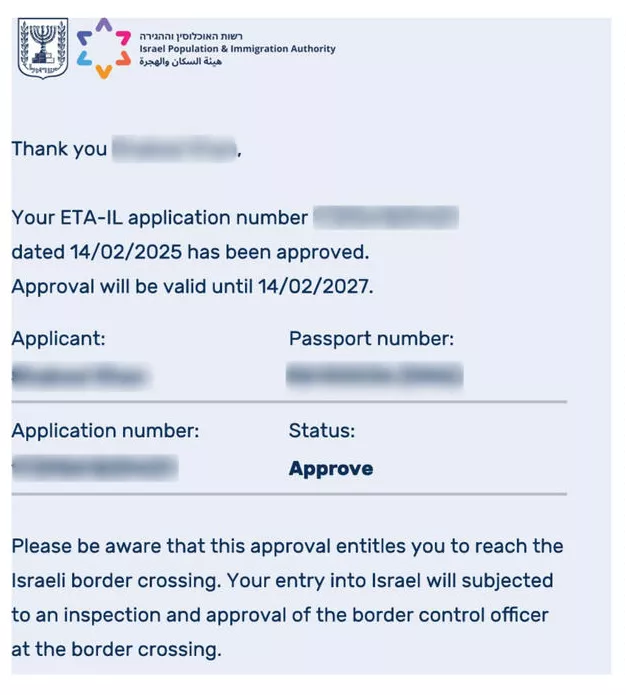
This guide explains who needs a transit visa for Israel, how to apply, and what to expect during airport transit.
What Is an Israel Transit Visa?
An Israel transit visa is a short-stay permit that allows foreign nationals to pass through an Israeli airport or seaport on their way to a third country. It is not the same as a tourist visa or the Israel ETA. The transit visa is specifically for travelers who need to change flights or pass through Israeli border control during a connecting journey.
Israel’s main transit point is Ben Gurion International Airport (TLV) near Tel Aviv, one of the busiest hubs in the Middle East. Many international routes – particularly between Europe, Asia, and Africa – connect through Tel Aviv.
Who Needs a Transit Visa?
Whether you need a transit visa depends on your nationality and whether you remain in the airport’s international transit zone.
Visa-Exempt Countries (No Transit Visa Needed)
Citizens of approximately 100 countries do not need a transit visa to pass through Israel. This includes nationals of:
- United States, Canada, and Mexico
- All European Union and EEA member states
- United Kingdom, Australia, and New Zealand
- Japan, South Korea, and Singapore
- Brazil, Argentina, and Chile
If your passport qualifies for visa-free entry to Israel, you can transit through any Israeli airport without additional permits. You may still need an ETA-IL depending on when your travel takes place – check the ETA requirements for the latest eligibility rules.
Countries That Require a Transit Visa
Nationals of countries that are not visa-exempt must obtain a transit visa, even if they do not plan to leave the international zone. This generally includes passport holders from:
- Most countries in South and Southeast Asia (India, Pakistan, Bangladesh, Sri Lanka, Nepal)
- Most countries in Sub-Saharan Africa
- Several countries in the Middle East and North Africa
- Some countries in Central Asia and the Caucasus
If you are unsure whether your nationality requires a transit visa, check the complete list of Israel visa types or contact the nearest Israeli embassy or consulate.
Special Case: Travelers With a Valid B/2 Visa or ETA-IL
If you already hold a valid Israel tourist visa (B/2) or an approved ETA-IL, you do not need a separate transit visa. Your existing authorization covers airport transit as well as entry into Israel.
Transit Visa vs. Other Israel Visa Types
The Israel transit visa is one of several visa categories. Here is how it compares to the most common alternatives:
| Feature | Transit Visa | B/2 Visitor Visa | ETA-IL |
|---|---|---|---|
| Purpose | Airport/seaport transit only | Tourism, business, short study | Short visits (visa-exempt nationals) |
| Maximum stay | Up to 72 hours | Up to 90 days | Up to 90 days |
| Can leave airport | Generally no (transit zone only) | Yes | Yes |
| Fee | Approximately $25 | 100 NIS | 25 NIS |
| Validity | Single or double entry | Multiple entries | Multiple entries over 2 years |
| Application method | Embassy/consulate | Embassy/consulate | Online |
For most travelers, the key distinction is that a transit visa keeps you within the airport’s international zone, while a B/2 visa or ETA-IL allows you to enter Israel proper.
How to Apply for an Israel Transit Visa
If your nationality requires a transit visa, follow these steps:
Step 1: Gather Required Documents
You will need the following:
- Valid passport with at least 6 months of remaining validity
- Completed visa application form (available from the Israeli consulate)
- Passport-sized photo meeting Israel’s photo specifications
- Confirmed onward ticket showing your connecting flight within 72 hours
- Valid visa for your destination country (if applicable)
- Proof of sufficient funds for the duration of your transit
Step 2: Submit Your Application
Applications must be submitted in person at an Israeli embassy or consulate in your country of residence. Israel does not currently offer an online transit visa application – unlike the ETA-IL application process, which is fully digital.
Step 3: Wait for Processing
Transit visa applications are typically processed within 5 to 10 business days, though processing times vary by consulate and nationality. During peak travel seasons, allow extra time. You can learn more about Israel visa processing times in our dedicated guide.
Step 4: Collect Your Visa
Once approved, your transit visa will be affixed to your passport. Verify that all details – name, passport number, validity dates – are correct before traveling.
What to Expect During Transit at Ben Gurion Airport
If you are transiting through Ben Gurion Airport, here is what to expect:
- Security screening: Israel is known for thorough airport security. Arrive early and be prepared for detailed questioning about your travel plans, luggage, and background.
- International transit zone: Transit passengers with valid visas can remain in the duty-free area between Terminal 1 and Terminal 3 without passing through immigration.
- Layover duration: If your layover exceeds 8 hours, you may want to consider whether a tourist visa would be more practical, as it allows you to leave the airport and explore.
- Connecting flights: Most major airlines – El Al, Turkish Airlines, Lufthansa, Emirates (via code-share), and others – offer connecting flights through Tel Aviv.
Frequently Asked Questions
Do I need a transit visa if I stay in the airport?
It depends on your nationality. Citizens of visa-exempt countries can transit without any visa. Nationals of non-exempt countries need a transit visa even if they remain in the international zone.
Can I leave the airport with a transit visa?
No. A transit visa only permits you to remain in the airport’s international transit zone. If you want to enter Israel, you need a B/2 visitor visa or an approved ETA-IL.
How long does it take to get an Israel transit visa?
Processing typically takes 5 to 10 business days at an Israeli embassy or consulate. During busy periods, it may take longer. Apply at least 2 to 3 weeks before your travel date.
How much does an Israel transit visa cost?
The transit visa fee is approximately $25 USD, though the exact amount may vary by consulate and your country of residence. Check with your local Israeli embassy for current pricing.
Can I apply for a transit visa online?
No. Unlike the ETA-IL, which is applied for entirely online, the transit visa must be obtained through an Israeli embassy or consulate in person.
What happens if my connecting flight is cancelled?
If your flight is cancelled and you need to leave the airport, you will need a valid entry visa (B/2 or ETA-IL). Transit visa holders who overstay in the transit zone may face immigration issues. Contact your airline for rebooking and the airport authorities for guidance.
Do children need a transit visa?
Yes. Children of non-exempt nationalities require their own transit visa, even if traveling with parents who have valid visas or citizenship of a visa-exempt country.
Key Takeaways
- Citizens of visa-exempt countries (US, UK, EU, Australia, etc.) can transit through Israel without a transit visa
- Nationals of non-exempt countries must apply for a transit visa at an Israeli embassy or consulate
- The transit visa allows stays of up to 72 hours in the international zone only
- If you already hold a valid B/2 visa or ETA-IL, no separate transit visa is needed
- Apply at least 2 to 3 weeks before your trip to allow for processing time
If you are eligible for the ETA-IL, it is the fastest and simplest option – you can apply online in just a few minutes and use it for transit or full entry into Israel.