

The Israel A3 clergy visa is a special-entry visa granted to members of the clergy and religious workers who wish to perform religious duties in Israel. Unlike the B2 tourist visa, which allows short visits for sightseeing or family visits, the A3 visa is specifically designed for ordained ministers, priests, rabbis, imams, monks, nuns, and other religious personnel who need to serve at a recognized religious institution in Israel. The visa requires sponsorship from an Israeli religious organization and is processed through the Ministry of Interior.
What Is the Israel A3 Clergy Visa?
The A3 visa is one of several non-immigrant visa categories in Israel’s visa classification system. It is reserved for individuals who are entering Israel for the purpose of performing religious duties, serving in a religious institution, or engaging in missionary or pastoral work. The visa is issued for a specific religious institution and ties your legal status to that organization.
Israel is home to sites sacred to Judaism, Christianity, Islam, and other faiths. Every year, thousands of clergy members, missionaries, and religious workers travel to Israel to serve at churches, monasteries, mosques, synagogues, yeshivas, and other religious establishments. The A3 visa provides the legal framework for these individuals to reside and work in Israel on a temporary basis.
The A3 visa is distinct from the B1 business visa, which covers employment and professional activities. Religious work is not classified as employment under Israeli law, so clergy members use the A3 category instead of the B1 work visa.
Who Qualifies for an A3 Clergy Visa?
The A3 visa is available to a broad range of religious workers, including:
- Ordained ministers, priests, pastors, and deacons
- Rabbis and yeshiva teachers
- Imams and Islamic scholars
- Monks and nuns serving at monasteries or convents
- Missionaries assigned to a specific religious institution in Israel
- Religious education instructors at faith-based schools
- Choir directors, cantors, and other religious music leaders
- Religious social workers affiliated with a faith-based organization
You do NOT qualify for an A3 visa if you are:
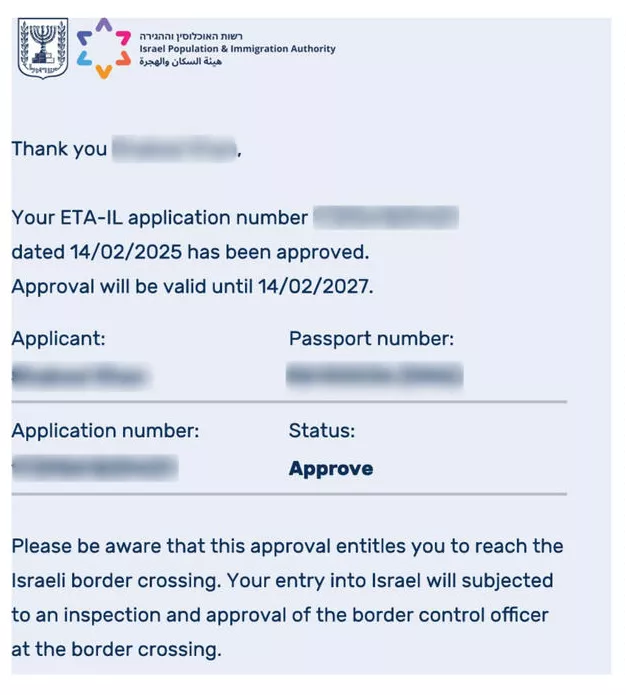
- A tourist visiting religious sites for personal pilgrimage (use the ETA-IL or B2 visa instead)
- A religious scholar attending a conference or academic event (a B2 visa or ETA-IL may suffice)
- A journalist covering religious topics in Israel
- A volunteer at a non-religious charitable organization
The key requirement is that you must be actively performing religious duties at a recognized institution, not merely visiting holy sites or studying religion in an academic setting.
A3 Clergy Visa Requirements
To apply for an Israel A3 clergy visa, you will need to gather documentation in several categories.
1. Valid Passport
Your passport must be valid for at least six months beyond your planned entry date into Israel. It should have at least two blank pages for visa stamps.
2. Completed Visa Application Form
The standard Israeli visa application form must be filled out in full. The form requires personal information, details about the sponsoring religious institution, the purpose and duration of your stay, and your religious qualifications.
3. Letter of Invitation from the Religious Institution
The Israeli religious organization that is hosting you must provide an official letter of invitation. This letter must include:
- The full name and address of the institution
- Your name and religious role or title
- The specific duties you will perform
- The duration of your assignment
- Confirmation that the institution will be responsible for your accommodation and welfare during your stay
4. Proof of Religious Ordination or Status
You must provide documentation proving your religious credentials. This may include:
- Ordination certificate
- Letter from your home religious authority confirming your status
- Seminary diploma or equivalent religious education certificate
- Membership records from your religious denomination
5. Passport-Sized Photographs
Two recent color photographs meeting Israeli visa specifications: 5.5 cm x 5.5 cm, white background, full face visible, no head coverings (unless worn for religious reasons).
6. Criminal Background Check
A police clearance certificate from your country of residence. The certificate must typically be no more than three months old at the time of submission.
7. Proof of Financial Support
Evidence that you will be financially supported during your stay. This may come from the sponsoring institution, your home church or religious body, or personal funds.
8. Health Insurance
Proof of valid health insurance that covers your stay in Israel. Some religious institutions provide insurance as part of the sponsorship arrangement.
9. Visa Fee Payment
The A3 visa application fee must be paid at the time of submission. Fees vary by nationality and the Israeli embassy or consulate where you apply.
How to Apply for an A3 Clergy Visa
The application process for the A3 clergy visa involves coordination between the sponsoring religious institution in Israel and the applicant abroad.
Step 1: Religious Institution Submits Request to Ministry of Interior
The Israeli religious institution that will host you must first submit a request to the Population and Immigration Authority (PIBA) within the Ministry of Interior. This request includes information about the institution, the applicant, and the nature of the religious work.
Step 2: Ministry of Interior Reviews the Application
PIBA reviews the sponsorship request. They verify that the institution is a legitimate religious organization registered in Israel and that the applicant’s role qualifies for A3 status. Processing typically takes 4 to 6 weeks.
Step 3: Approval Notification
If approved, the Ministry of Interior issues an approval notification that is sent to the sponsoring institution. This document authorizes the applicant to proceed with the visa application at an Israeli embassy or consulate.
Step 4: Embassy Visa Application
With the approval notification, you visit the nearest Israeli embassy or consulate to submit your visa application. You present your passport, photographs, proof of ordination or religious status, background check, and the approval letter from the Ministry of Interior.
Step 5: Visa Issuance
The embassy processes your application, usually within 1 to 3 weeks. Once approved, the A3 visa is stamped in your passport. You may then travel to Israel and begin your religious duties.
Step 6: Register Upon Arrival
After entering Israel, you must visit a Ministry of Interior office to register and obtain your A3 visa card. This card serves as your official identification during your stay.
A3 Clergy Visa Fees and Processing Time
| Item | Cost (Approximate) | Notes |
|---|---|---|
| Sponsorship application (institution) | NIS 500 – 1,200 | Paid by the religious institution |
| A3 visa application fee | NIS 170 – 440 | Depends on nationality |
| A3 visa card (after arrival) | NIS 170 | Paid at Ministry of Interior |
| Renewal fee | NIS 170 – 340 | Annual renewal required |
| Total estimated first-year cost | NIS 840 – 1,980 | Lower than B1 work visa costs |
Total processing time from initial sponsorship request to visa issuance is typically 6 to 10 weeks. The Ministry of Interior review takes 4 to 6 weeks, and the embassy processing adds 1 to 3 weeks.
A3 Visa Duration and Renewal
The A3 clergy visa is typically issued for one year and can be renewed annually. The renewal process requires the sponsoring institution to submit a renewal request to the Ministry of Interior before the current visa expires. Updated documentation about your religious role and the institution’s continued need for your services must be provided.
There is no maximum limit on the number of renewals, but each renewal is evaluated on its own merits. If the Ministry of Interior determines that the religious institution no longer requires your services, or if the institution’s registration has lapsed, the renewal may be denied.
A3 Visa vs Other Israel Visa Types
| Feature | A3 Clergy Visa | B1 Work Visa | B2 Tourist Visa | ETA-IL |
|---|---|---|---|---|
| Purpose | Religious duties | Employment | Tourism | Short visits |
| Sponsor required | Yes (religious institution) | Yes (employer) | No | No |
| Maximum stay | 1 year (renewable) | 1 year (renewable) | 90 days | 90 days |
| Employment allowed | Religious work only | Yes | No | No |
| Processing time | 6-10 weeks | 4-12 weeks | 1-4 weeks | Minutes to 72 hours |
| Can bring family | Yes (A4 visa) | Yes (A4 visa) | No | No |
For a detailed comparison of all Israeli visa categories, see our complete guide to Israel visa types. For the full list of documents required across all visa types, see our Israel visa requirements guide.
Can You Bring Family Members?
Yes. A3 visa holders can apply for A4 dependent visas for their spouse and children under 18. The A4 visa allows family members to live in Israel for the same duration as the primary A3 visa holder. Family members on A4 visas are generally not permitted to work unless they obtain separate work authorization.
To apply for A4 dependent visas, you will need marriage certificates and birth certificates for children. Documents issued outside Israel may need to be apostilled and translated into Hebrew.
Restrictions and Conditions of the A3 Visa
The A3 clergy visa comes with several important conditions:
- Tied to a specific institution. Your visa is valid only for work at the sponsoring religious institution. You cannot switch employers or institutions without reapplying.
- No secular employment. The A3 visa does not permit you to take up paid employment outside of your religious duties. If you wish to work in a non-religious capacity, you would need to apply for a B1 work visa instead.
- Must maintain religious status. If you leave the religious order, are defrocked, or otherwise lose your religious credentials, your A3 visa may be revoked.
- Registration requirement. You must register with the Ministry of Interior upon arrival and maintain updated registration if you change addresses within Israel.
- Exit and re-entry. The A3 visa is typically a single-entry or multiple-entry visa depending on the issuance. Check your visa stamp to confirm whether re-entry is permitted after leaving Israel.
Common Challenges with A3 Visa Applications
Institution Registration Issues
The sponsoring religious institution must be properly registered with the Israeli Ministry of Interior as a recognized religious organization. If the institution’s registration is incomplete or has lapsed, the A3 application will be delayed or denied. Always verify that your sponsoring institution’s registration is current before beginning the application process.
Proof of Ordination
Some applicants struggle to provide adequate proof of their religious status, particularly if their ordination occurred many years ago or if their denomination does not issue formal ordination certificates. In such cases, a detailed letter from the head of your religious body explaining your role, qualifications, and the nature of your religious duties can help.
Processing Delays
The Ministry of Interior may request additional documentation or clarification during the review process, which can extend processing times beyond the typical 4 to 6 weeks. Starting the application process at least 3 months before your intended travel date is strongly recommended.
Tips for a Smooth A3 Visa Application
- Start early. Begin the process at least 3 months before your planned travel date to allow for potential delays.
- Coordinate with the sponsoring institution. The institution in Israel must complete several steps before you can apply at the embassy. Maintain close communication with them throughout the process.
- Gather documents in advance. Background checks, ordination certificates, and other documents may take weeks to obtain. Start collecting them as soon as the sponsorship request is filed.
- Keep copies of everything. Maintain both physical and digital copies of all submitted documents, including the sponsorship letter, approval notification, and embassy receipts.
- Check embassy requirements. Different Israeli embassies and consulates may have slightly different documentation requirements or processing times. Contact your local embassy for the most current information.
- Plan for visa card registration. After arriving in Israel, you must visit a Ministry of Interior office to register. The office may have long wait times, so plan accordingly.
FAQs About Israel Religious Visa
What is the Israel A3 clergy visa?
The A3 clergy visa is a special-entry visa for members of the clergy and religious workers who wish to perform religious duties at a recognized religious institution in Israel. It requires sponsorship from an Israeli religious organization and is processed through the Ministry of Interior.
Who can apply for an A3 clergy visa?
Ordained ministers, priests, rabbis, imams, monks, nuns, missionaries, and other religious personnel who have a confirmed assignment at a recognized religious institution in Israel can apply. You must provide proof of your religious ordination or status.
How long does it take to get an A3 clergy visa?
Total processing time is typically 6 to 10 weeks. The Ministry of Interior reviews the sponsoring institution’s request in 4 to 6 weeks, and the embassy visa application adds another 1 to 3 weeks.
How much does the A3 clergy visa cost?
Total first-year costs range from approximately NIS 840 to NIS 1,980, covering the sponsorship application, visa fee, and registration. This is generally less expensive than the B1 work visa.
Can I work in Israel on an A3 clergy visa?
You can perform religious duties at the sponsoring institution only. The A3 visa does not permit secular employment. If you want to take up paid work outside of religious duties, you would need a B1 work visa.
Can my family join me on an A3 visa?
Yes. Your spouse and children under 18 can apply for A4 dependent visas to live in Israel with you for the duration of your A3 visa.
Is the A3 visa renewable?
Yes. The A3 visa is typically issued for one year and can be renewed annually as long as the sponsoring institution continues to require your services and all visa conditions are met.
What is the difference between the A3 clergy visa and the B2 tourist visa?
The A3 visa is for performing religious duties at a specific institution and allows long-term stays with annual renewals. The B2 tourist visa is for short visits of up to 90 days and does not permit any form of work, including religious work. For brief pilgrimages, the ETA-IL or B2 visa may be sufficient.
Can I visit holy sites on an A3 clergy visa?
Yes, you can visit religious sites throughout Israel in addition to performing your duties at the sponsoring institution. However, the primary purpose of your stay must be religious service, not tourism.
What happens if I leave the religious order while on an A3 visa?
If you lose your religious credentials or leave the religious order, your A3 visa may be revoked. You would need to apply for a different visa category or leave Israel within the timeframe specified by the Ministry of Interior.