

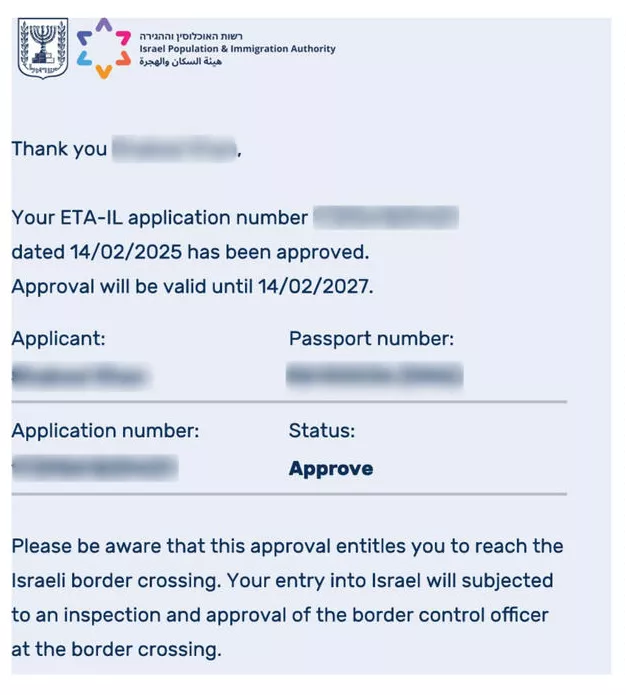
The Israel ETA-IL is valid for two years from the date of approval or until your passport expires, whichever comes first. Each visit under the ETA allows a maximum stay of 90 consecutive days. The authorization is multiple-entry, so you can enter and leave Israel as many times as you want within the validity period, as long as each individual stay does not exceed 90 days.
What Does ETA-IL Validity Mean?
When your Israel Electronic Travel Authorization (ETA-IL) is approved, it comes with two separate time limits that you need to understand:
- Authorization validity – The window during which the ETA-IL itself is active (two years or until passport expiry)
- Per-visit stay limit – The maximum number of consecutive days you can remain in Israel during a single trip (90 days)
These are distinct concepts. Your authorization might be valid for another 18 months, but that does not mean you can stay in Israel for 18 months straight. Each entry resets the 90-day clock.
If you are still deciding between an ETA and a traditional visa, our guide on Israel ETA vs Visa explains the key differences.
How Long Is the ETA-IL Valid?
The ETA-IL authorization remains valid for two years (24 months) from the date it is approved. However, if your passport expires before the two-year mark, the ETA-IL expires on the same day as your passport.
| Factor | Validity Period |
|---|---|
| Standard validity | 2 years from approval date |
| Passport expiry before 2 years | Expires when passport expires |
| Passport renewal required | New ETA-IL needed with new passport |
| Multiple entries allowed | Yes – unlimited entries within validity |
Important: The two-year validity clock starts on the day PIBA approves your application, not the day you first enter Israel. If you apply six months before your trip, you lose six months of validity.
What Happens When Your Passport Expires
If you renew your passport while your ETA-IL is still technically valid, the authorization becomes void. You must apply for a new ETA-IL using your new passport details. There is no transfer process between passports.
This is a critical point for travelers whose passports are close to expiry. Before applying for an ETA-IL, check that your passport will remain valid for the full duration you need. Our Israel ETA Requirements guide covers passport validity rules in detail.
How Long Can You Stay in Israel Per Visit?
Each entry to Israel under the ETA-IL allows a maximum stay of 90 consecutive days. This limit is set by the Israeli border officer when you arrive, and it is stamped in your passport.
The 90-day maximum is not guaranteed. Border officers have discretion to grant a shorter stay based on:
- The purpose of your visit
- Your return ticket or onward travel plans
- Your accommodation arrangements
- Previous travel history to Israel
Most tourists receive the full 90 days without issue. Business travelers and those with frequent visits may receive shorter stays.
The 90-Day Stay Rule
The 90-day limit applies to a single continuous visit. Here is how it works in practice:
| Scenario | Allowed? |
|---|---|
| Stay 90 days, leave, re-enter the next day | Yes – each entry allows a fresh stay |
| Stay 90 days, leave, return for another 90 days | Yes – no mandatory gap between visits |
| Stay 91 days without leaving | No – overstaying is a violation |
| Stay 60 days, leave for 2 weeks, return for 60 more days | Yes – second stay is independent |
While there is no officially published rule limiting the total number of days you can spend in Israel per year, border officers may question travelers who appear to be living in Israel on a tourist authorization. Frequent long stays can trigger additional scrutiny at the border.
Multiple Entries: How Often Can You Visit?
The ETA-IL is a multiple-entry authorization. There is no limit on the number of times you can enter Israel during the two-year validity period. Each entry allows up to 90 days.
This makes the ETA-IL suitable for:
- Tourists visiting Israel multiple times over two years
- Business travelers with recurring meetings
- Transit passengers passing through Israel on connecting flights
- Visitors combining Israel with neighboring countries (Jordan, Egypt)
For travelers who only need to pass through Israel without leaving the airport, our Israel Transit Visa guide has specific information about transit rules.
Can You Extend Your Stay Beyond 90 Days?
If you need to stay in Israel longer than 90 days, you must apply for an extension at the Population and Immigration Authority (PIBA) office before your 90 days expire. Extensions are not automatic and are evaluated on a case-by-case basis.
Common reasons for extensions include:
- Medical treatment requiring continued presence
- Ongoing legal proceedings
- Humanitarian circumstances
- Academic study (though a student visa may be more appropriate)
Overstaying your authorized period without an approved extension is a serious violation. It can result in fines, deportation, and a ban on future entry to Israel. Always apply for an extension well before your authorized stay ends.
If your ETA-IL application was denied in the past, see our guide on what to do if your Israel ETA is denied for next steps.
ETA-IL Validity vs. Passport Validity
Your passport must be valid for at least six months beyond your intended entry date to Israel. This is a separate requirement from the ETA-IL validity period.
| Requirement | Minimum Validity |
|---|---|
| Passport validity | 6+ months beyond entry date |
| ETA-IL authorization | Up to 2 years from approval |
| Per-visit stay | Up to 90 days |
If your passport has less than six months of validity remaining, you should renew it before applying for an ETA-IL. Applying with a passport that is about to expire wastes the 25 NIS application fee, since the ETA-IL will expire with the passport.
What Happens After the ETA-IL Expires?
When your ETA-IL expires, you lose authorization to enter Israel under the visa-exempt program. You have two options:
-
Apply for a new ETA-IL – If your passport is still valid, you can submit a fresh application through the PIBA portal. The process is the same as your first application, and approval typically comes within 24-72 hours. Our step-by-step application guide walks you through the process.
-
Apply for a traditional visa – If you are no longer eligible for an ETA-IL (for example, if your nationality is not on the visa-exempt list), you will need to apply for a visa through an Israeli embassy or consulate. See our Israel visa types overview for more information.
Do not attempt to enter Israel with an expired ETA-IL. Airlines will check your authorization at check-in, and you will be denied boarding.
Validity Summary
| Key Fact | Detail |
|---|---|
| Authorization validity | 2 years from approval date |
| Passport dependency | Expires when passport expires (if sooner) |
| Per-visit maximum stay | 90 consecutive days |
| Entry type | Multiple entry – unlimited trips |
| Stay extension | Possible via PIBA before 90-day limit |
| Overstay consequences | Fines, deportation, entry ban |
| New passport required | New ETA-IL application needed |
FAQs About Israel ETA Validity
Can I use the same ETA-IL for multiple trips to Israel?
Yes. The ETA-IL is a multiple-entry authorization. You can enter and leave Israel as many times as you want during the two-year validity period, with each visit lasting up to 90 days.
Does the 90-day stay reset every time I leave Israel?
Yes. Each time you leave Israel and re-enter, the border officer grants a new stay period of up to 90 days. There is no mandatory waiting period between visits.
What if my passport expires while my ETA-IL is still valid?
Your ETA-IL becomes invalid when your passport expires. You must apply for a new ETA-IL with your new passport. The old authorization cannot be transferred.
Can I stay in Israel for the full two years of my ETA-IL validity?
No. The two-year validity only means you can enter Israel during that period. Each individual stay is limited to 90 days. You must leave and re-enter for a new stay period.
How do I extend my stay beyond 90 days?
Apply for an extension at a PIBA office before your 90 days expire. Extensions are granted on a case-by-case basis for valid reasons such as medical treatment or legal proceedings. Overstaying without approval results in penalties.
Will I be questioned if I visit Israel frequently?
Possibly. While there is no official limit on visit frequency, border officers may ask questions if you appear to be living in Israel on a tourist authorization. Have clear answers about your purpose of visit and accommodation ready.
Do I need a new ETA-IL if I renew my passport?
Yes. Each ETA-IL is linked to a specific passport. When you get a new passport, the old ETA-IL is void and you must submit a fresh application with the new passport details.
Can I apply for a new ETA-IL before my current one expires?
Yes. You can apply for a new ETA-IL at any time. However, the new authorization’s two-year clock starts from the approval date of the new application, not from when the old one expires.