

If your Israel ETA application was denied, you can reapply after correcting the issue or apply for a regular visa through an Israeli embassy. The ETA-IL system rejects applications for specific, documented reasons – and most are fixable. This guide covers every rejection reason, what to do next, and how to avoid denial on your next attempt.
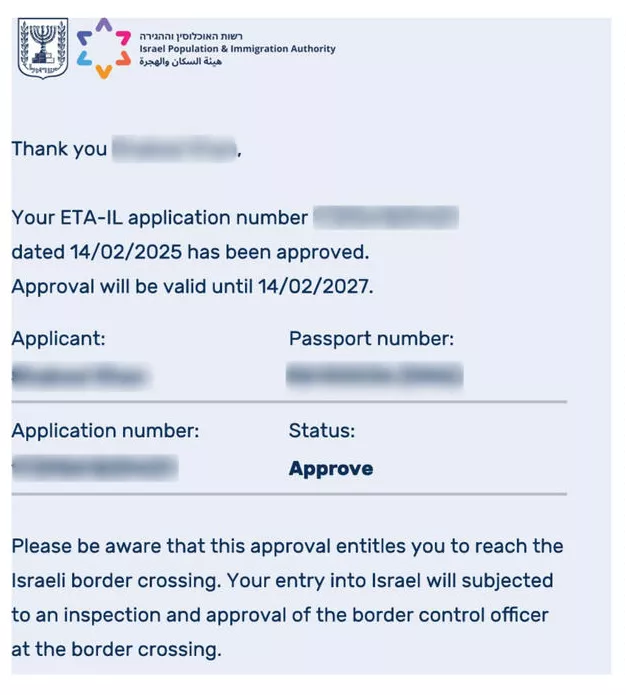
Why Israel ETA Applications Get Denied
The Israel Population and Immigration Authority (PIBA) processes all ETA-IL applications and may reject them for several clearly defined reasons. Unlike some electronic travel systems that auto-approve most applications, Israel’s ETA involves security screening that can result in denial.
The most common rejection reasons include:
- Incomplete or inaccurate personal information – mismatched passport data, wrong date of birth, or spelling errors in your name
- Passport validity issues – passport expiring within 6 months of your planned entry date
- Security or background concerns – flags from security databases or previous immigration violations
- Prior visa overstays or deportations – if you previously overstayed in Israel or were deported
- Criminal record flags – certain criminal convictions that affect admissibility
- Duplicate applications – submitting multiple ETA requests simultaneously
- Ineligibility based on nationality – citizens of countries not eligible for the ETA program
Understanding which reason applies to your case is critical, because the solution depends entirely on the specific rejection cause.
What Happens When Your ETA-IL Is Rejected
When PIBA denies your ETA application, you receive an email notification stating that your application was not approved. The notification typically does not include the specific reason for denial – this is standard practice for security-related rejections.
Here is what you should expect:
| Stage | What Happens | Timeline |
|---|---|---|
| Application submitted | PIBA receives your request | Instant |
| Processing period | Security screening and data verification | 24-72 hours (usually) |
| Rejection notification | Email sent to your registered address | Within processing window |
| Reapplication window | You may submit a new application | No mandatory waiting period |
| Embassy visa option | Apply for a traditional visa at an Israeli consulate | Varies by location |
The good news is that there is no official waiting period before you can reapply. However, reapplying without fixing the underlying issue will likely result in another denial.
Step-by-Step: What to Do After an Israel ETA Denial
Step 1: Review Your Application Details
Before doing anything else, carefully check every field of your original application. Compare it character-by-character with your passport. Common errors that lead to rejection include:
- Passport number entered incorrectly (transposed digits, missing characters)
- Name spelling differs from passport (even one letter matters)
- Date of birth in wrong format (DD/MM/YYYY vs MM/DD/YYYY)
- Passport expiration date miscalculated
- Wrong nationality selected
If you find an error, you can submit a new application with the corrected information.
Step 2: Check Your Passport Validity
Israel requires your passport to be valid for at least 6 months beyond your planned entry date. If your passport expires within this window, your ETA will be denied regardless of other factors.
Solution: Renew your passport first, then reapply with the new passport details. Make sure the passport requirements are fully met before resubmitting.
Step 3: Address Security or Immigration History Issues
If your denial relates to a previous overstay, deportation, or security concern, reapplying online is unlikely to succeed. These cases require direct intervention.
Solution: Contact the nearest Israeli embassy or consulate. You may need to:
- Provide documentation explaining the prior violation
- Show evidence that the issue has been resolved
- Apply for a traditional visa through the consular process
- Attend an in-person interview if required
The difference between an ETA and a traditional visa is significant here – the consular visa process allows you to present your case directly to an immigration officer, which is not possible with the automated ETA system.
Step 4: Apply for a Regular Visa at an Embassy
If repeated ETA applications are denied, the embassy route is your best path forward. A consular visa application allows you to submit supporting documents, provide explanations for any issues in your immigration history, and receive a human review of your case.
What you will need for an embassy application:
| Document | Purpose |
|---|---|
| Valid passport | Must be valid for 6+ months |
| Completed visa application form | Available at the embassy or online |
| Passport-sized photos | Meeting Israeli photo specifications |
| Proof of accommodation | Hotel bookings or invitation letter |
| Return flight ticket | Demonstrating intent to leave |
| Financial proof | Bank statements showing sufficient funds |
| Cover letter | Explaining purpose of visit |
| Previous denial letter | If applicable, include your ETA rejection notice |
Step 5: Understand the Fee Implications
Each ETA application costs NIS 25 (approximately USD 7). If your application is denied, the fee is not refunded. This applies to every submission, including reapplications. If you check the current fee structure, you will see this is the standard rate for all applicants regardless of outcome.
For embassy visa applications, fees vary by visa type and nationality. Expect to pay significantly more than the ETA fee, typically USD 20-80 depending on your country.
How to Avoid Israel ETA Denial: Prevention Checklist
Before submitting your ETA-IL application, run through this checklist:
- [ ] Passport valid for at least 6 months beyond planned entry
- [ ] All personal details match passport exactly (name, DOB, passport number)
- [ ] No previous Israeli visa overstays or deportations on record
- [ ] No pending security flags from prior visits
- [ ] Only one active application submitted (no duplicates)
- [ ] Nationality is eligible for the ETA-IL program
- [ ] Application completed in full (no blank required fields)
- [ ] Payment method has sufficient funds for the NIS 25 fee
If you are a US citizen or UK citizen, you are eligible for the ETA program and rejections are rare when applications are filled out correctly.
Can You Appeal an Israel ETA Denial?
No, there is no formal appeals process for ETA-IL denials. The electronic system does not provide a mechanism to challenge or appeal a rejection decision. Your options are:
- Reapply online – if you believe the denial was due to an error in your application, correct the issue and submit again
- Apply through an embassy – if the denial is security or immigration-history related, the consular process gives you a chance to present your case
- Seek legal counsel – for complex immigration situations, an Israeli immigration lawyer can advise on the best course of action
There is no limit on the number of times you can reapply for an ETA. However, multiple consecutive denials may flag your record, making the embassy route more practical.
Rejection vs. Pending: Understanding the Difference
Not every delayed application is a rejection. If your ETA status shows “pending” for more than 72 hours, it does not necessarily mean denial.
| Status | Meaning | Action |
|---|---|---|
| Approved | ETA granted | Travel to Israel with your passport |
| Pending | Still under review | Wait up to 7 business days |
| Not Approved | Application denied | Follow steps in this guide |
| Expired | Previous ETA no longer valid | Reapply with current details |
You can check your application status at any time using your application reference number and passport details.
FAQs About Israel ETA Denial
How long do I have to wait before reapplying after an Israel ETA denial?
There is no mandatory waiting period. You can submit a new application immediately after a denial. However, make sure you have addressed the reason for the original rejection before reapplying.
Will a previous ETA denial affect my future applications?
A single denial for a data-entry error will not affect future applications if the correction is made. Multiple denials for the same reason, or denials related to security concerns, may result in increased scrutiny on subsequent applications.
Can I get a refund if my Israel ETA is denied?
No. The NIS 25 application fee is non-refundable regardless of the outcome. This applies to all applications, including those that are denied.
Should I reapply online or go to the embassy after a denial?
If your denial was likely due to a simple data error (wrong passport number, name mismatch), reapply online with corrected details. If you suspect the denial is security-related or relates to prior immigration history, go directly to an Israeli embassy for a consular visa application.
Does an Israel ETA denial mean I am banned from entering Israel?
No. An ETA denial means your electronic travel authorization was not approved, but it does not constitute an entry ban. You can still apply for a traditional visa through an Israeli embassy and potentially gain entry that way.
Can US citizens have their Israel ETA denied?
Yes. While US citizens are eligible for the Israel ETA program, applications can still be denied for incorrect information, insufficient passport validity, or security-related reasons. US citizens benefit from high approval rates when applications are completed accurately.
What if my Israel ETA was approved before but is now denied on renewal?
Previous approval does not guarantee future approval. Each application is evaluated independently. Changes in your circumstances, passport validity, or security databases between applications can result in different outcomes.
Can I enter Israel without an ETA if I have a valid visa stamp in my passport?
Yes. If you hold a valid Israeli visa stamp obtained from an embassy, you do not need an ETA. The ETA and traditional visa are separate authorization pathways – having one makes the other unnecessary.
How do I know if my denial is due to a security issue?
The rejection email will not specify the exact reason for security-related denials. If you have corrected all application data, verified passport validity, and still receive repeated denials, the issue is likely security or immigration-history related. Contact an Israeli embassy for guidance.