
Israel does not legally require travel insurance for most visitors entering on an ETA or tourist visa, but medical costs in Israel are high enough that a policy covering at least $50,000 in medical expenses is strongly recommended. Whether you are applying for the ETA-IL or a B2 tourist visa, having the right insurance in place protects you from unexpected hospital bills, trip cancellations, and emergency evacuations.
Is Travel Insurance Mandatory for Israel?
Israel does not impose a blanket travel insurance requirement on tourists, business visitors, or ETA holders. Unlike countries such as Cuba, Russia, or the Schengen Area, Israeli border officials do not typically ask to see proof of insurance at passport control.
However, there are specific situations where insurance becomes a requirement:
- Palestinian Authority territory visitors: Travelers entering certain areas via land crossings may be asked for proof of medical coverage.
- Group tours and organized travel: Many tour operators require participants to carry travel insurance as a condition of booking.
- Work visa (B1) holders: Employers sponsoring a B1 work visa often mandate health insurance as part of the employment contract.
- Student visa (A2) holders: Universities and yeshivot typically require proof of insurance for enrollment.
For the majority of short-term visitors using the Israel ETA requirements, travel insurance is optional but highly advisable.
Why You Should Get Travel Insurance for Israel
Israeli healthcare is excellent but expensive. A single night in a private hospital can cost $1,500-$3,000, and an emergency room visit runs $500-$1,000 before any treatment. Even a minor injury requiring stitches or imaging can result in a bill exceeding $2,000.
Key reasons to carry insurance:
- Medical emergencies: Accidents, sudden illness, or exacerbation of pre-existing conditions
- Hospitalization costs: Private hospitals in Tel Aviv and Jerusalem charge rates comparable to US facilities
- Emergency evacuation: Helicopter or ambulance evacuation from remote areas (Negev Desert, Golan Heights) can exceed $10,000
- Trip cancellation: Non-refundable flights and hotel bookings lost due to illness or security events
- Lost or stolen belongings: Electronics, passports, and travel documents
- Security-related disruptions: Regional instability can cause flight cancellations and itinerary changes
What Does Israel Travel Insurance Typically Cover?
A comprehensive travel insurance policy for Israel should include the following coverage areas:
| Coverage Type | Recommended Minimum | Notes |
|---|---|---|
| Emergency medical expenses | $50,000-$100,000 | Hospital stays, surgery, medication |
| Emergency dental | $1,000-$2,000 | Acute dental pain or injury |
| Medical evacuation | $100,000 | Air ambulance if needed |
| Trip cancellation | Full trip cost | Non-refundable bookings |
| Trip interruption | 150% of trip cost | Return flights + unused bookings |
| Lost/delayed baggage | $1,000-$2,500 | Per-person coverage |
| Personal liability | $100,000-$500,000 | Damage to third parties |
| 24/7 assistance hotline | Included | Multilingual support critical |
Pre-Existing Conditions
Most standard policies exclude pre-existing medical conditions. If you have a chronic illness, diabetes, heart condition, or are pregnant, look for a policy with a pre-existing condition waiver. These typically require purchasing the policy within 14-21 days of your first trip payment.
Types of Travel Insurance for Israel
Single-Trip Insurance
Covers one trip with defined departure and return dates. Best for travelers visiting Israel once. Prices range from $30-$80 for a 7-14 day trip depending on age and coverage level.
Annual Multi-Trip Insurance
Covers unlimited trips within a 12-month period, usually with a per-trip maximum of 30-90 days. Ideal for frequent travelers or business visitors who travel to Israel multiple times per year. Annual policies cost $150-$400.
Schengen-Compatible Insurance
If you are visiting Israel as part of a broader Europe trip that includes Schengen countries, you may need a policy that meets Schengen visa insurance requirements (minimum €30,000 medical coverage). This is relevant for travelers on the Israel ETA for EU citizens program who are also visiting other European destinations.
How Much Does Israel Travel Insurance Cost?
Travel insurance costs vary based on age, trip length, coverage level, and provider. Here are typical price ranges for a standard policy:
| Traveler Profile | 7-Day Trip | 14-Day Trip | 30-Day Trip |
|---|---|---|---|
| Solo traveler (age 25-40) | $25-$50 | $40-$75 | $60-$120 |
| Couple (age 30-45) | $45-$85 | $70-$130 | $100-$200 |
| Family of 4 | $60-$120 | $100-$180 | $150-$280 |
| Senior traveler (65+) | $50-$100 | $80-$160 | $130-$250 |
These prices assume a mid-tier policy with $50,000+ medical coverage. Budget policies start lower but often carry higher deductibles and fewer covered activities.
Top Travel Insurance Providers for Israel
Several international insurers offer strong coverage for Israel travel:
- World Nomads – Popular with backpackers and adventure travelers; covers over 200 activities
- Allianz Travel – Well-known global brand with 24/7 multilingual assistance
- IMG Global – Strong medical coverage, good for long-term travelers
- SafetyWing – Affordable subscription model, popular with digital nomads
- Battleface – Specializes in high-risk destinations, good for regional coverage
- Heymondo – Competitive pricing with solid medical limits
When comparing policies, check that Israel is not listed as an excluded destination. Some insurers exclude coverage for countries with active security advisories, though Israel is generally included in standard policies.
What to Look for in a Policy
Before purchasing, verify these key points:
- Israel is covered: Confirm the destination is not excluded
- No war/terrorism exclusion: Some policies exclude claims related to “acts of war” or terrorism; given Israel’s security situation, look for policies that cover conflict-related disruptions
- Adventure activities: If you plan to hike in the Negev, dive in Eilat, or visit the Dead Sea, ensure these activities are covered
- COVID-19 coverage: Most policies now include pandemic-related coverage, but verify medical treatment and quarantine costs are included
- Direct billing vs. reimbursement: Direct billing (where the insurer pays the hospital directly) is preferable; reimbursement requires you to pay upfront and claim later
Israel’s Healthcare System and Tourists
Israel has a world-class healthcare system with modern hospitals and English-speaking medical staff. Key facilities include:
- Hadassah Medical Center (Jerusalem) – Major trauma center
- Ichilov Hospital (Tel Aviv) – Largest hospital in central Israel
- Rambam Medical Center (Haifa) – Northern Israel’s primary hospital
- Soroka Medical Center (Beer Sheva) – Serves the Negev region
Tourists can access emergency rooms at any hospital. Without insurance, you will be billed directly and may need to pay before discharge. With insurance, present your policy card at admission for direct billing arrangements.
Travel Insurance and the Israel ETA
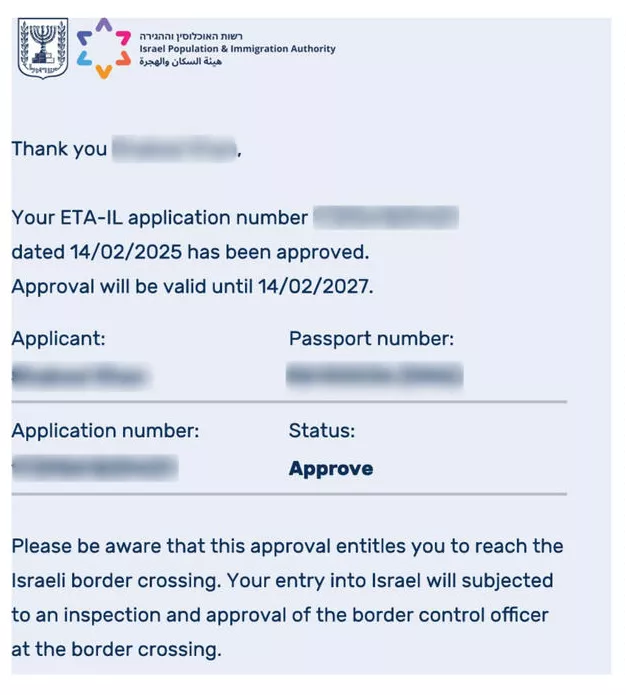
The Israel ETA application does not require proof of insurance. The ETA-IL is a straightforward electronic authorization – you provide passport details, personal information, and answer security questions. Insurance documentation is not part of the application process.
However, having insurance in place before your trip is still wise. The Israel ETA processing time is typically 24-72 hours, giving you ample time to arrange both your ETA and insurance simultaneously.
FAQs About Israel Travel Insurance
Do I need travel insurance for Israel if I have an ETA?
No, the Israel ETA does not require travel insurance. However, medical costs in Israel are high, and insurance is strongly recommended to cover unexpected hospitalization, evacuation, and trip disruptions.
Will my regular health insurance cover me in Israel?
Some domestic health plans (particularly US-based plans) offer limited international coverage. Check with your insurer before relying on domestic coverage abroad. Most experts recommend a dedicated travel insurance policy for Israel trips.
Does travel insurance cover security incidents in Israel?
Many policies cover trip cancellation and medical expenses related to security events, but some exclude “acts of war” or “terrorism.” Read the policy wording carefully and choose a provider that explicitly covers conflict-related disruptions.
Can I buy travel insurance after arriving in Israel?
Some insurers allow purchase after departure, but coverage may be limited or subject to waiting periods. It is best to buy insurance before your trip begins to ensure full coverage from the moment you leave home.
What happens if I need medical care in Israel without insurance?
You will be billed directly by the hospital. Israeli hospitals require payment or a guarantee of payment before non-emergency treatment. Emergency treatment is provided regardless of ability to pay, but you will still receive a bill afterward.
Is travel insurance required for visiting Jerusalem and the West Bank?
Israel does not require insurance for visiting Jerusalem. For the West Bank, some tour operators require proof of insurance. If you plan to visit Palestinian Authority areas, confirm your policy covers this region specifically.
How do I file a travel insurance claim from Israel?
Contact your insurer’s 24/7 assistance hotline immediately. Keep all receipts, medical reports, and police reports (if applicable). Most insurers require claims to be filed within 30-90 days of the incident. Take photos of all documentation as backup.
Does Schengen travel insurance cover Israel?
Schengen insurance policies typically cover the Schengen Area only. Israel is not part of the Schengen zone. If you are visiting both Europe and Israel, ensure your policy explicitly lists Israel as a covered destination or purchase a worldwide policy.